- Products
-
Shops
AI Search

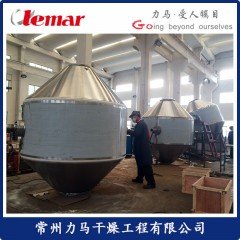
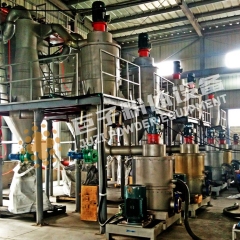
2000L Hyaluronic Acid Double-Cone Rotary Vacuum Dryer
Total equipment volume: 2000L
**Working Volume: 1000L** **Loading Weight: 500kg**
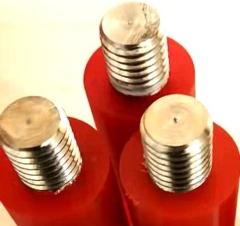
The vacuum filter heads are arranged in three units, distributed at 120° angles.
All equipment surfaces that come into contact with materials shall be made of SUS316L, while all surfaces not in direct contact with pharmaceuticals shall be constructed or clad with high-quality SUS304 stainless steel.
The thickness of the outsourced stainless steel plate shall not be less than δ=2.0mm.
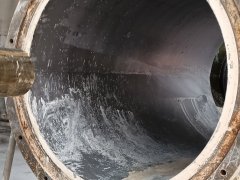
All convex and concave components on both the inner and outer surfaces of the equipment are designed with rounded transitions (R≥10mm) or chamfered transitions at an angle of no less than 135°, ensuring no dead corners and easy cleaning.
The inner surface of the equipment shall have a polishing finish of Ra ≤ 0.4 μm, and the outer surface shall have a polishing finish of Ra ≤ 0.6 μm. The manufacturer shall provide a roughness inspection report (accompanied by the calibration certificate of the roughness tester and on-site inspection photos).
The sealing material is pharmaceutical-grade silicone rubber or polytetrafluoroethylene.
All welds or solder joints should be polished and passivated. The materials of components and parts shall comply with production, process, and GMP requirements.
The outer surface is smooth, clean, and aesthetically pleasing, with chamfering and rounding at transitions. Bolts and nuts exposed on the equipment's exterior must be capped or covered, and there shall be no obvious dents, burrs, scratches, impacts, or signs of corrosion.
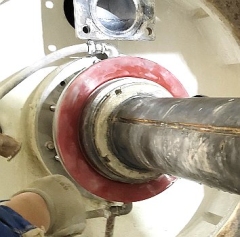
The inspection door should be equipped with silicone rubber seals. Effective sealing should be provided between the drum shaft and the machine guard, as well as between the vacuum tube, hot water inlet and return pipes, and the machine body, to prevent internal debris from spreading outward.
The equipment structure is reasonable, with a sanitary manhole at the feed end of the barrel and a sanitary butterfly valve and quick-install blind plate at the discharge end; the sealing ring is made of pharmaceutical-grade silicone.
Internal design pressure of the cylinder: -0.1MPa to 0.098MPa
Jacket design pressure: 0.5MPa
Barrel rotation speed: 0–10 r/min adjustable, with forward and reverse control.
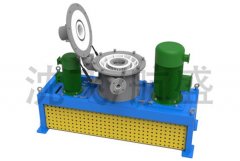
The transmission part consists of: primary belt drive, secondary worm gear reducer, and tertiary chain drive.
The drive shaft and the bearings of each component are critical parts of this equipment. Their material and machining precision must meet the requirements for continuous full-load production of this equipment. Under normal usage conditions, no quality issues shall arise within three years.
The design of the vacuum tube sealing seat must be reasonable to ensure that under any condition of the equipment, when the material barrel reaches its ultimate vacuum, no oil or other impurities enter the barrel to contaminate the materials.
The vacuum-breaking (venting) component must be equipped with a filtration device, and the filter element pore size should be 0.22 μm.
The sealing performance of the barrel is a critical control point of this equipment. In a fully sealed state, close the vacuum valve and maintain -0.1MPa for no less than 60 minutes.
The equipment's support must be stable, capable of bearing the full-load operational weight of the equipment without any deformation or wobbling. It must undergo anti-rust treatment. The bottom of the support must be sealed with a stainless steel plate.
The manhole cover at the feed end of the cylinder must be equipped with quick-install interfaces for a vacuum pressure gauge and a platinum resistance thermometer, meeting sanitary-grade requirements.
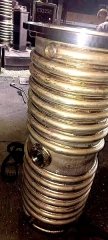
The pipe interfaces of the equipment adopt a sanitary quick-install design and are equipped with stainless steel quick-install metal hoses.
The lubricating oil inside the equipment shall comply with the manufacturer's design requirements, but leakage must be prevented. The manufacturer provides **the lubricating oil to be added**, with the quantity meeting the equipment's requirements. Thoroughly clean the oil tank before adding lubricating oil. The supplier must specify the lubrication methods for the main components.
Any lubricating oil or grease used on the equipment should be food-grade, non-toxic products. The lubricating oil must not come into contact with medications, and a food-grade quality inspection certificate along with industry certification documents should be provided.
The lubricant used must not come into contact with the product or any equipment surfaces that may come into contact with the product.
The thickness of the equipment cylinder insulation layer shall not be less than 50mm, and the insulation material shall be aluminum silicate.