- Products
-
Shops
AI Search

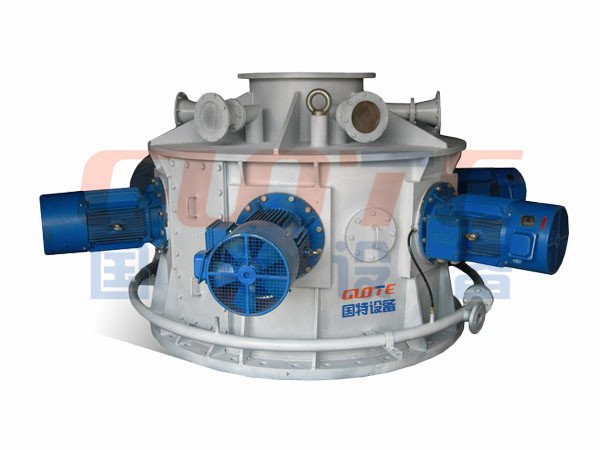
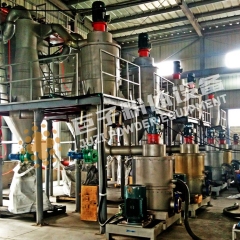
Product Name: Horizontal Multi-Rotor Air Classifier
Classification Particle SizeD97:μm:3-75 4-75 5-75
Production capacity3-30t/h
Application Areas: Widely used in industries such as chemicals, minerals (especially suitable for classifying non-metallic mineral products like calcium carbonate, kaolin, quartz, and mica), metallurgy, abrasives, ceramics, refractory materials, pesticides, pharmaceuticals, food, and new materials.
Materials: Chemical, mineral (such as calcium carbonate, kaolin, quartz, talc, barite, graphite, and other non-metallic minerals), ceramics, refractory materials, pharmaceuticals, pesticides, food, new materials, and other industries.
Device Introduction:The classifier system consists of an airflow classifier, a cyclone separator, a dust collector, an induced draft fan, and an electrical control cabinet. The material moves at high speed with the airflow from the lower feed inlet of the classifier into the classification chamber. Under the centrifugal force generated by the high-speed rotating classification wheel and the centripetal force produced by the airflow, coarse and fine particles are separated. Fine particles meeting the particle size requirements pass through the gaps between the blades of the classification wheel and enter the cyclone separator and dust collector for collection. Coarse particles, along with some fine particles, are thrown off by the classification wheel and fall to the lower part of the classifier. Natural airflow is rectified into a uniform swirling flow through the guide chamber, further separating fine particles mixed or adhered to coarse particles. The separated coarse particles are discharged from the coarse material outlet at the bottom of the classifier through a rotary valve. The rotational speed of the classification wheel is controlled by a frequency converter.
Highlight advantages:
1.- The particle size of the graded product can be as fine as D97: 3 microns, and the product particle size is adjustable.
2.- High fineness, large output
3.- Small fitting clearance, with gas seal preventing the entry of large particles.
4.- It is divided into two types: horizontal single-rotor and horizontal multi-rotor, and users can choose according to actual needs.
5.The multi-rotor classifier not only achieves high output but also maintains ** performance in terms of cut-point precision.
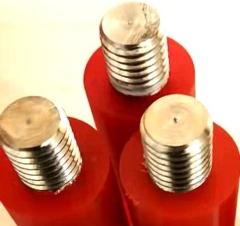
6.- The classifying wheel can be made of materials such as carbon steel, stainless steel, ceramics, or polyurethane according to customer requirements.
7.- The system operates under negative pressure, and the dust emission levels comply with national environmental protection standards.
Working Principle Introduction: The classifier, cyclone separator, dust collector, and induced draft fan form a classification system. Under the suction force of the fan, the material is drawn from the lower part of the classifier. The feed inlet moves at high speed with the rising airflow to the classification zone. Under the strong centrifugal force generated by the high-speed rotating classification turbine, coarse and fine materials are separated. Fine particles meeting the particle size requirements pass through the gaps between the classification wheel blades and enter the cyclone separator. The separator or dust collector captures the material. Coarse particles, carrying some fine particles, lose their velocity upon impacting the wall and descend along the cylinder wall to the secondary air inlet. There, the strong washing action of the secondary air separates the coarse and fine particles, causing the fine particles to rise to the classification zone for secondary classification. level, coarse particles descend to the discharge port and are expelled.