- Products
-
Shops
AI Search

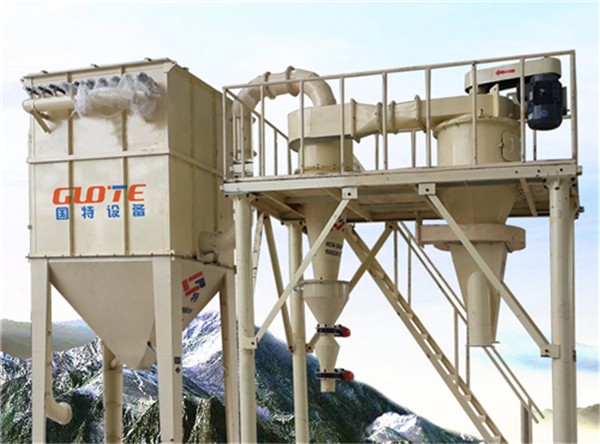
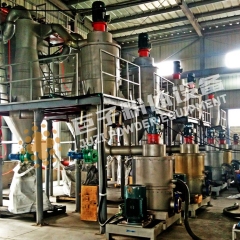
Product Description: The airflow classifier for laboratory use is designed with a compact structure, easy to adjust, and simple to operate.
Multiple stages can be connected in series to simultaneously produce products with several particle size segments.
The classification point can be adjusted through the rotation of the classifying impeller and the airflow of the induced draft fan to achieve the desired product, offering a wide range of options.
Product Advantages: The classifier features a specially designed structure that effectively blocks large particles, ensuring precise classification and strict control over large particles.
Using low-speed vertical single-impeller classification, the material flow is smooth and stable, with high processing capacity and extremely high classification efficiency.
Applicable materials: mineral powder, chemical raw materials, metal powder, etc.; Application fields: mineral processing, chemical industry, food, pharmaceuticals, etc.
Working Principle Introduction
After separation, the coarse material from the machine is collected and discharged by the unloading device from the classifier. Fine powders below the classification diameter are carried by the gas-solid two-phase flow into a cyclone collector and a pulse dust collector for collection, while the purified gas is discharged by the induced draft fan.
Under the suction force of the induced draft fan, the material of this machine enters from the lower cylinder. The external primary air fully mixes with the material, allowing the particles to be thoroughly dispersed and rise to the classification zone. The particles are subjected to both the centrifugal force generated by the rotation of the classification impeller and the centripetal force generated by the induced draft fan. When the centrifugal force on the particles exceeds the centripetal force, coarse particles above the classification diameter are thrown to the inner wall of the cylinder, lose speed, and slide down along the wall. The external secondary air enters through the air inlets evenly distributed on the cone, creating an air-screening effect on the coarse particles to separate the fine powder mixed or adhered to the coarse material.
Technical Parameters
Model | Processing capacity(kg) | Classification Efficiency(%) | Product Granularity(um) | Matching power(kw) |
GF10 | 10~50 | 70~90 | D97=5~ 50 | 3~7 |
GF20 | 50~ 200 | 70~90 | D97=5~ 50 | 10~20 |
GF30 | 100~ 500 | 70~90 | D97=5~ 50 | 15~30 |