- Products
-
Shops
AI Search

Product Features
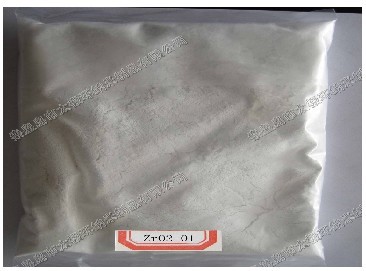
It is divided into tetragonal phase, cubic phase, and monoclinic phase. Independently developed as a high-purity white powder, it exists in a monoclinic crystal system at low temperatures and a tetragonal crystal system at high temperatures. Soluble in sulfuric acid and hydrofluoric acid, it exhibits excellent thermochemical stability, high-temperature conductivity, as well as high strength and toughness at elevated temperatures. It also possesses favorable mechanical, thermal, electrical, and optical properties.
Nano-sized zirconia has extremely small particle size, strong stability, and exhibits resistance to acids, alkalis, corrosion, and high temperatures. It can be used in functional ceramics, structural ceramics, and gemstone materials, with its performance significantly improved compared to micron-sized zirconia.
Application Scope:
1. Ceramic pigments, high-purity pigments, ceramic glazes;
2. High-temperature optical components, oxygen-sensitive components, high-capacity electrical appliances, optical storage devices, image display components, optical modulation components, optical shutters, 3D television glasses, and image storage and display components.
3. Abrasive materials, insulating materials, flame-retardant materials, X-ray photography;
4. High-temperature resistant, wear-resistant components, bearing nozzles, smelting crucibles; Thermal barrier coating materials: Thermal barrier coatings provide insulation for air-cooled metal components operating under high-temperature critical conditions. Specific applications include insulation coatings for aerospace engines, linings for submarine and marine diesel engine cylinders, among others.
5. Piezoelectric components, electronic switches and solid dielectrics, filters, temperature and pressure sensors and sensing elements, electrodes for magnetohydrodynamic generators, heating elements;
6. Artificial gemstones;
7. Fuel Cells: Zirconia ceramic powder features low thermal conductivity, a high expansion coefficient, and excellent chemical stability and thermal shock resistance. It is used in engineering ceramics, electrolytes, thermal barrier coatings, advanced refractory materials, and fuel cells. In particular, it holds great potential as an electrolyte in solid oxide fuel cells (SOFCs).
8. Functional ceramics: Utilizing the microcracks and residual stress generated by the transformation of ZrO2 from the tetragonal phase to the monoclinic phase to toughen ceramics. Zirconia nanocomposites—nanocomposite ceramics, with a fracture toughness of 4.3 MPa/m², which is nearly double that of cordierite. Composite bioceramics: Hydroxyapatite artificial bone implants prepared by conventional methods have low strength and toughness, failing to meet application requirements. By adjusting the ZrO2 content, this nanocomposite artificial bone material can achieve excellent biocompatibility.
Recommended dosage: Depending on the system, the addition amount ranges from 1% to 10%. Users should determine the **addition amount** through experiments based on different systems, or contact our company.