- Products
-
Shops
AI Search

Technical Parameters
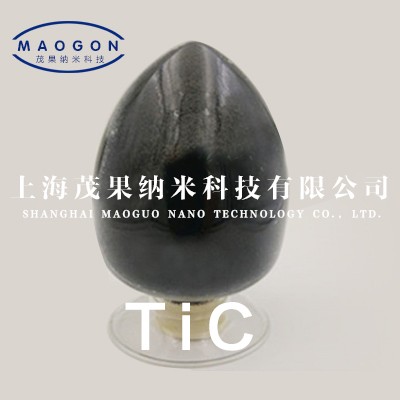
Product Classification | Model/Type | Average particle size (nm) | Purity (%) | Specific surface area (m2/g) | Bulk densityDensity (g/cm3) | Crystal form | Color |
Nanoscale | MG-TiC-50 | 50 | 99.9 | 23.0 | 0.08 | Cubic structure | BlackColor |
Note: Products of different granularities can be provided based on user requirements. | |||||||
Product Performance:
This product features high purity, small particle size, uniform distribution, large specific surface area, high surface activity, low bulk density, as well as high temperature resistance, oxidation resistance, high strength, high hardness, good thermal conductivity, excellent toughness, and UV shielding greater thanOver 80%, and it possesses excellent properties such as good electrical conductivity and chemical inertness towards ferrous metals, making it a highly valuable material for applications.
Application direction:
1、Metal Matrix Composites
(1) Abrasives and grinding tools industry: Titanium carbide abrasive is an ideal substitute for traditional grinding materials such as alumina, silicon carbide, boron carbide, and chromium oxide. The grinding capability of nano-titanium carbide is comparable to that of synthetic diamond, significantly reducing costs. It has been widely used in countries such as the United States, Japan, and Russia. Products made from nano-titanium carbide materials, such as abrasives, grinding wheels, and polishing pastes, can greatly enhance grinding efficiency, improve grinding precision, and increase surface finish.
(2) Electrical contact coating materials: Currently, silver used for contact materials accounts for one-quarter of the global annual consumption. Adding an appropriate amount of nano-TiC to silver coating materials can reduce silver usage by 5%, lower costs, and result in more stable composite coating performance.
(3) Metal-ceramic composite coating: Applying a nano-TiC ceramic composite coating on the metal surface can enhance mechanical wear resistance and corrosion resistance. It has been successfully applied in static, dynamic, and harsh environments to protect the substrate, thereby improving the efficiency and service life of components.
(4) Cutting tools: The application of nano-TiC ceramic hard coatings on cutting tools not only enhances the wear resistance of the tool surface without compromising the toughness of the metal substrate, but also reduces cutting time and improves the surface precision of the workpiece. Using nanocrystalline particles with a TiC content of 20% to 30% as raw materials to produce Al2O3-TiC ceramic tools can achieve excellent anti-spalling performance.
2. In the field of powder metallurgy: Nano titanium carbide powder is used as a raw material for producing ceramic and cemented carbide parts through powder metallurgy, such as wire drawing dies and cemented carbide molds. Nano titanium carbide-based cemented carbide has the following characteristics:
(1) High hardness, generally reaching HRA 90 or above;
(2) Good wear resistance and low wear rate;
(3) Excellent high-temperature resistance and oxidation resistance;
(4) Good thermal conductivity and excellent chemical stability.
3. Surfacing welding electrodes: Adding nano-TiC to surfacing welding electrodes can significantly enhance the hardness and wear resistance of the surfacing layer. The HRC hardness of the weld layer can be increased from 50 to 60. Additionally, it allows for multi-layer surfacing and remains crack-free even after water quenching.
4. Ceramics industry:
(1) **Foam Ceramics**: Foam ceramics, when used as filters, can effectively remove impurities from various fluids. TiC foam ceramics exhibit superior strength, hardness, thermal conductivity, electrical conductivity, and heat resistance compared to oxide ceramics. Therefore, they are more suitable for producing high-quality foam ceramics.
(2) Smelting metal crucible: TiC ceramic has a face-centered cubic crystal structure, high melting point, good thermal conductivity, high hardness, excellent chemical stability, no hydrolysis, and strong high-temperature oxidation resistance. Therefore, crucibles made of TiC for high-temperature applications exhibit better dimensional stability and a longer service life.
Technical Support:
For specific application inquiries, please contact the sales department. Inquiry hotline:021-56******, Mobile: 13524******, QQ: 1992604556, Email: sales@mg********
Precautions:
This product should be stored in a cool, dry indoor area, avoiding heavy pressure. For untreated powder, it should not be exposed to air during use to prevent moisture absorption and agglomeration, which may affect dispersion performance and usage effectiveness.