- Products
-
Shops
AI Search
Product Features
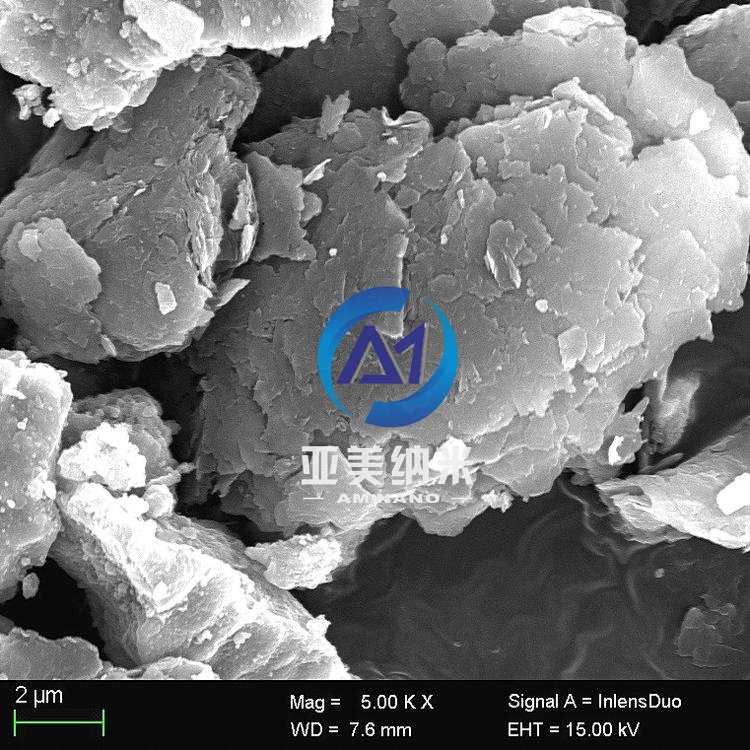
Research on MAX phases dates back to the 1960s, when Nowotny and others first proposed the concept of ternary transition metal carbides or nitrides. In 2000, Barsoum collectively referred to these materials as "Mn+1AXn phases" (abbreviated as MAX phases), where M represents a transition metal element, A represents a main group element, and X represents C or N. Titanium aluminum carbide is a member of the MAX phase ceramic family.
Product Applications
In the Ti-Al-C system MAX phases, Al can rapidly diffuse during oxidation and undergo selective oxidation to form a dense Al2O3 film, preventing further oxidation of the base material. The microstructure of the interface between titanium aluminum carbide (Ti3AlC2 and Ti2AlC) and the generated Al2O3 endows this system material with high-temperature self-healing capability. In high-temperature environments, cracks or scratches on the material's surface are filled by this oxide, thereby restoring the material's original properties, especially its mechanical properties. This characteristic is of great significance for maintaining the material's mechanical performance, enhancing its stability and reliability, and making it more promising for application in high-temperature environments.
Titanium aluminum carbide (Ti₃AlC₂ and Ti₂AlC) exhibits rapid diffusion of aluminum (Al) at high temperatures and selective oxidation characteristics, enabling self-welding of the material itself and layer-to-layer welding, respectively. The fracture toughness of the layered materials obtained through self-welding of titanium aluminum carbide (Ti₃AlC₂ and Ti₂AlC) is significantly enhanced compared to that of single-phase materials.
Similarly, by exploiting the weak bonding between the Al layers and TiC layers in the MAX phase titanium aluminum carbide (Ti₃AlC₂), hydrofluoric acid (HF) can be used to etch away the Al, producing a novel two-dimensional carbide known as "MXene." Its morphology resembles that of graphene. The excellent electrical conductivity of MXene makes it a potential material for lithium-ion batteries.
MAX phase products, particularly titanium silicon carbide (Ti3SiC2), exhibit high damage tolerance, excellent mechanical and thermal properties, making them potential candidates for use in fourth-generation nuclear reactors as cladding materials for nuclear fuel in gas-cooled fast reactors. In recent years, the radiation damage resistance of titanium silicon carbide (Ti3SiC2) has attracted increasing attention.
Packaging and Storage
This product is packaged in inert gas-filled plastic bags and should be stored sealed in a dry, cool environment. It should not be exposed to air to prevent moisture-induced oxidative agglomeration, which may affect dispersion performance and usage effectiveness. Packaging quantities can be provided according to customer requirements, with sub-packaging available.