- Products
-
Shops
AI Search

The rotary flash dryer produced by Haomai has the following features:
1. The dual-air duct tangential air intake is adopted to avoid the velocity non-uniformity of the rotating field in the radial flow field.
2. Effectively control the final moisture content and fineness by coordinating and unifying the cyclone blades and the inlet air velocity.
3. The arrangement structure of the rotating blades is unique, featuring low wear, wide contact surface, and strong cutting force.
4. Proficient in handling heat-sensitive materials. The bottom of the main unit is a high-temperature zone, where the gas velocity is high and a cooling water protection device is installed, preventing the possibility of material coking or discoloration.
5. Low system resistance, high thermal efficiency, good operating environment, and low labor intensity.
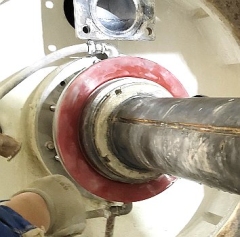
6. The main engine adopts a new sealing structure, extending the service life of the main engine bearings, and the bearing housing is equipped with an oil circulation cooling device.
Rotary Flash Dryer Process Flow
The air is heated to approximately 150°C by the heater before entering the rotary flash dryer. The wet material is conveyed by a transport device to the screw feeding mechanism, which allows for stepless speed regulation. After being extruded, the material is forced into the main tower, where it is immediately crushed by high-speed rotating blades with varying angles. It is then impacted by the high-temperature airflow entering the main tower at high speed, causing it to rotate rapidly and be carried upward. At this point, the airflow temperature drops sharply, and the moisture in the material evaporates quickly, completing the drying process.
Changzhou Haomai Drying is currently one of the domestic enterprises with the widest variety and most complete specifications of drying equipment. Its product range now covers advantageous fields such as powder conveying equipment, drying equipment, granulation and coating equipment, as well as crushing and mixing equipment. These products are widely used in industries such as food, chemical pharmaceuticals, chemical products, and ceramics, with an annual output of over 800 sets of various types of equipment.