- Products
-
Shops
AI Search
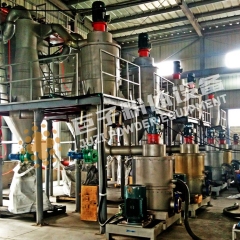
Ultra-fine pulverizers are widely used for the high-precision processing of various materials in industries such as mining, chemicals, and construction, including barite, calcite, potassium feldspar, talc, marble, limestone, dolomite, fluorite, lime, activated clay, activated carbon, bentonite, kaolin, cement, phosphate rock, gypsum, glass, and insulation materials, as well as flammable and explosive minerals. The finished product size can be adjusted within a range of 400 to 3000 mesh.
Structure of an Ultrafine Grinder
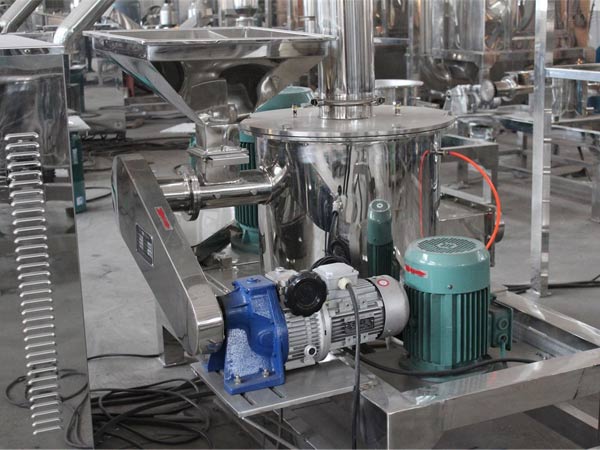
A pulverizer is a device that achieves ultra-fine grinding of dry materials through the high-speed rotation of crushing blades impacting the material, combined with the cyclone separation of airflow. It consists of a feeding port, a collection tank, a crushing chamber, a high-speed motor, and other components. The ultra-fine pulverizer is equipped with mechanisms for coarse crushing, fine grinding, and pneumatic conveying, achieving the purpose of grinding through high-speed impact. The pulverizer utilizes wind energy to produce powder in a single pass, eliminating the traditional screening process.
Working Process of an Ultrafine Grinder
The material enters the crushing chamber through the feed port and is crushed by high-speed rotating blades (23,000 r/min). The high-speed rotation of the crusher blades also induces airflow, which carries the crushed material into the crushing tank. The airflow is then discharged through the crusher's filter bag, completing the crushing process.