- Products
-
Shops
AI Search

Paddle dryer for printing and dyeing sludge and municipal sludge
The sludge parameters of our company are as follows:
Processing capacity: 100 tons/day, operating 24 hours a day
Sludge type: printing and dyeing + municipal
Water content: 80% before drying, 30% after drying
Heat source: 0.5MPa saturated steam, approximately 160°C
Equipment Material: The body is made of stainless steel.
Type of drying equipment: Choose paddle type or disc type.
Electricity fee: 1.5 yuan/kWh
Labor cost: 5K/person/month
Steam cost: 150 yuan/ton
Please provide a technical proposal from your company, including equipment model, power, dimensions, heat transfer area, volume, rotational speed, supporting equipment, pricing, and operating costs.
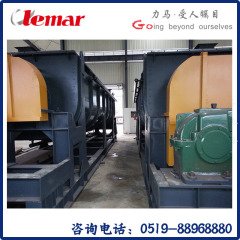
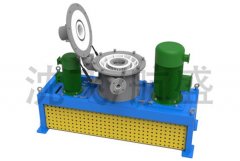
Hollow blade dryer is a horizontal stirring-type continuous drying equipment that primarily relies on heat conduction. Due to the stirring blades being shaped like paddles, it is called a paddle dryer, and internationally, it is also referred to as a trough dryer or a stirring dryer.
Since the heat required for drying this equipment relies on indirect heating through thermal conduction, the drying process requires little to no gas to carry away moisture. This significantly reduces the heat loss caused by airflow, improving thermal efficiency, making it an energy-saving drying equipment. Paddle dryers are widely used in industries such as petrochemicals, chemicals, metallurgy, food, pharmaceuticals, and pesticides for drying materials in powder, granular, filter cake, and slurry forms.
Changzhou Lima Drying Engineering Co., Ltd. has improved and optimized the design of wedge-shaped hollow paddle dryers based on absorbing advanced technologies from both domestic and international sources. These dryers can indirectly heat or cool paste-like, granular, powdery, and slurry materials, and can perform unit operations such as drying, cooling, heating, sterilization, reaction, and low-temperature calcination. The specially designed wedge-shaped stirring heat transfer paddles in the equipment offer high heat transfer efficiency and self-cleaning functionality for the heat transfer surfaces.