- Products
-
Shops
AI Search

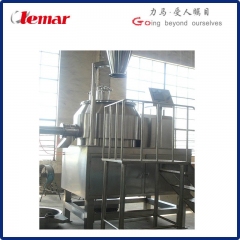
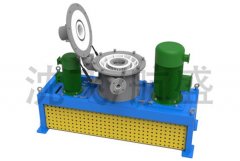
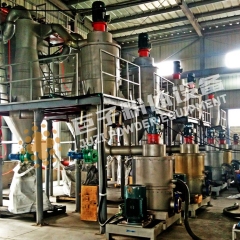
Laboratory Small High-Efficiency Wet Mixing Granulator GHL-50
Characteristics of High-Speed Mixing Granulator:
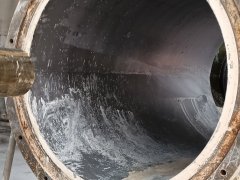
1. Adopts a horizontal cylindrical structure, with a reasonable design;
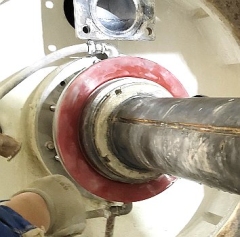
2. Inflatable seal drive shaft, can be switched to water during cleaning;
3. Fluidized granulation produces granules that are nearly spherical in shape and have good flowability.
4. Compared to traditional processes, it reduces adhesive usage by 25% and shortens drying time.
5. Each batch undergoes dry mixing for 2 minutes and granulation for 1-4 minutes, increasing work efficiency by 4-5 times compared to traditional processes.
6. Completed within the same sealed container, dry mixing - wet mixing - granulation, process reduction, compliant with GMP standards.
7. The entire operation is equipped with strict safety protection measures.
Common Methods and Characteristics of High-Speed Mixing Granulators:
Granulation commonly includes wet granulation, one-step granulation, and dry granulation. Granulation involves processes such as mixing the powder of raw and auxiliary materials with a binder to form a damp mass, followed by drying the granules. However, the traditional method of preparing the damp mass involves using a trough mixer to form the mass, which is then processed through an oscillating granulator to produce wet granules. These wet granules are subsequently dried in a drying oven to obtain dry granules. This method suffers from low output, high labor intensity, significant pollution, long production cycles, and a large equipment footprint. Recently, it has gradually been replaced by continuous production methods using high-speed mixing granulators combined with fluidized bed drying granulation, or by the one-step granulation method.
Functional requirements for a laboratory-scale small high-efficiency wet granulator:
1. The mixing paddle dry-mixes the materials and, after adding the binder, wet-mixes them. Based on the characteristics of the materials and the binder, the rotational speed of the mixing paddle ensures the generation of a vortex, allowing the materials to be thoroughly mixed. Meanwhile, in the intersection area near the granulating blade, the tumbling material clusters are fully broken down into granules.
2. The rotational speeds of the stirring paddle and granulating knife enable the material to undergo three-dimensional motion, causing particles to collide, rub, and shear, resulting in uniform and fine friction and the formation of stable spherical particles. The mixing time, speeds of the stirring paddle and granulating knife, as well as the quality and uniformity of granules after drying, meet the process requirements of solid dosage form production.
3. The process should be carried out in a closed state. The entire mixing and granulation process (including feeding, mixing, cutting granulation, and discharging) should be conducted under a cleanliness level of Class 100,000 or Class 300,000, ensuring no foreign matter falls in.
4. The machine can be integrated with boiling drying, lifting feeding, or vacuum feeding equipment.