- Products
-
Shops
AI Search

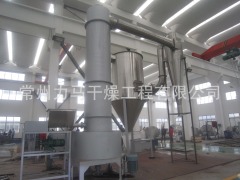
XSG-14 Flash Dryer for Modified Starch
I. Material Overview
Based on the inherent properties of natural starch, physical, chemical, or enzymatic treatments are employed to improve starch performance and expand its application range. These treatments introduce new functional groups onto the starch molecule or alter the molecular size and granular properties of starch, thereby modifying its natural characteristics (such as gelatinization temperature, hot viscosity and its stability, freeze-thaw stability, gel strength, film-forming ability, transparency, etc.) to better suit specific application requirements. Starch that has undergone such secondary processing and property modification is collectively referred to as modified starch.
II. Principle of Modified Starch Flash Dryer
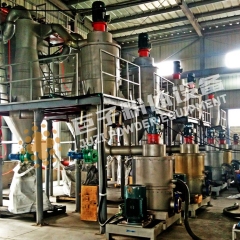
Hot air enters the stirring and crushing drying chamber from the bottom of the dryer through the inlet pipe at an appropriate spouting velocity, generating intense shearing, collision, and friction on the material, which is thereby micronized, enhancing mass and heat transfer. At the bottom of the dryer, larger and wetter particle clusters are mechanically broken by the stirrer, while particles with lower moisture content and smaller particle size are carried upward by the rotating airflow, undergoing further drying during the ascent. Due to the rotational flow of the gas-solid two-phase system, the inertia of the solid phase is greater than that of the gas phase, resulting in a relatively high relative velocity between the solid and gas phases, which enhances mass and heat transfer between the two phases. Therefore, this machine exhibits high production intensity.
III. Overview of Modified Starch Flash Dryer
The modified starch flash dryer can reduce the moisture content of modified starch from 25-30% to below 10%, with a processing capacity of 1000 kg per hour, greatly meeting the production needs of enterprises. The inlet air temperature of the equipment is maintained at a constant 145°C, ensuring more stable drying of the product. In terms of equipment materials, our company uses stainless steel for surfaces in contact with the material, while the rest is carbon steel. Product collection employs a cyclone separator and a bag filter, ensuring complete collection of the product.
IV. Characteristics of the Modified Starch Flash Dryer
Due to the material being subjected to centrifugation, shearing, collision, and friction, it is micronized into a highly dispersed state. The relatively high gas-solid velocity enhances mass and heat transfer, resulting in high evaporation intensity and large production capacity for the machine.
The material undergoes processes such as crushing, dispersing, drying, and classification simultaneously within the dryer, achieving multiple functions in one machine and offering a wide range of applications.
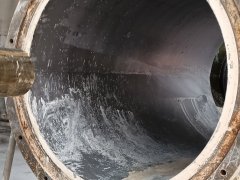
The strong rotating airflow formed by the dry gas inside the device exerts a powerful scouring and carrying effect on the material on the inner walls, thereby eliminating the phenomenon of material adhesion to the walls.
In the high-temperature zone at the bottom of the dryer, heat-sensitive materials do not come into direct contact with the hot surface, thereby solving the problem of coking and discoloration of heat-sensitive materials.
The particle size and moisture content of the outlet material can be controlled through the classifier at the upper part of the drying chamber, ensuring product quality.
The dryer operates under slight negative pressure, eliminating the need for product crushing and thus preventing environmental pollution.
This machine features a compact structure, a small footprint, low labor intensity for operators, and ease of operation.
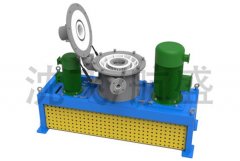
This machine is equipped with a special feeder, which solves the bridging and clogging issues of filter cake materials, ensuring that the materials can be added into the dryer uniformly, quantitatively, continuously, and stably. It resolves the difficulty of feeding paste-like materials.
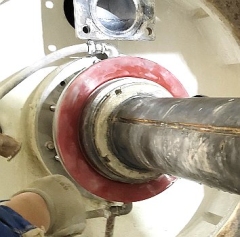
The key components of the dryer are easy to replace, and the critical control parameters are adjustable to modify the material residence time, accommodating the drying needs of various product types.