- Products
-
Shops
AI Search

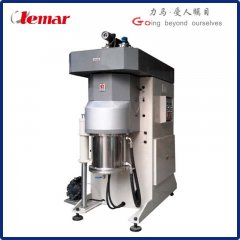
Nano Alumina Vertical Sand Mill 100L
In recent years, nano-Al₂O₃ materials, as one of the promising functional and structural materials of the 21st century, have attracted significant attention from related industries.
Nano-Al₂O₃ exhibits a sharp increase in the ratio of surface atoms to total atoms as the particle size decreases, resulting in pronounced small-size effects, quantum size effects, surface effects, and macroscopic quantum tunneling effects. Consequently, it demonstrates a series of excellent properties in optics, electricity, thermodynamics, and chemical reactions. Since Gleiter et al. successfully synthesized nano-scale Al₂O₃ in the mid-1980s, people's understanding of this advanced material has deepened, and more efficient processes and methods for preparing nano-Al₂O₃ have been explored. Currently, commonly used preparation methods include hydrothermal method, precipitation method, sol-gel method, reverse micelle microemulsion method, solvent evaporation method, alkoxide hydrolysis method, and mechanical grinding method. However, chemical preparation methods suffer from drawbacks such as complex processes that are difficult to scale up for mass production, high energy consumption, and a tendency to cause environmental pollution, while product quality also requires improvement. In contrast, physical mechanical preparation methods successfully address the shortcomings of chemical methods, making it possible to achieve environmentally friendly, low-energy, large-scale industrial production of nano-Al₂O₃.
Currently, the equipment capable of effectively industrializing the production of nanomaterials through physical mechanical methods may be limited to bead mills, with the vast majority on the market being horizontal bead mills. However, horizontal bead mills generally face four major issues that are difficult to resolve, such as easy leakage and damage of mechanical seals, frequent clogging of screens, difficulty in achieving nanoscale grinding with ultra-fine beads, and uneven particle size distribution of the ground product.