- Products
-
Shops
AI Search

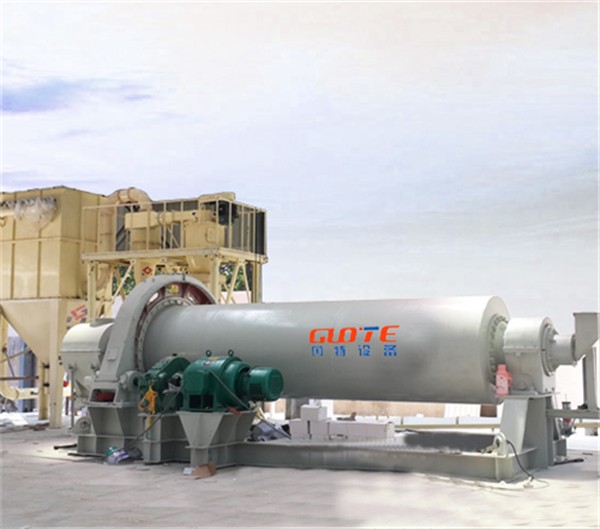
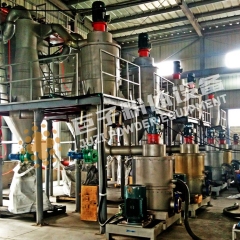
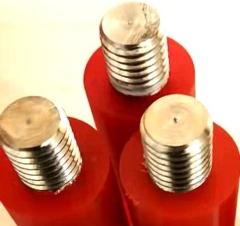
Silica powder processing features minimal material contamination, stable product quality, and controllable particle size distribution. The classifier impeller blades are made of high-molecular wear-resistant materials, which effectively solve the problem of iron contamination during equipment wear.
Can be used for hard materials such as quartz, feldspar, aluminum oxide, bauxite, and zircon sand; it can also be used for soft minerals such as calcite, marble, limestone, and barite.
The equipment is made of special materials and crafted with advanced techniques, making it particularly suitable for the quartz sand industry. It features an internationally standard production line that can be customized in design, production, and manufacturing according to customer requirements. The entire production line operates under negative pressure, ensuring no dust leakage throughout the entire process, making it environmentally friendly and pollution-free.
Working Principle Introduction
Silica powder processing uses quartz or aluminum oxide ceramic materials. The internal system of the classifier is lined with aluminum oxide ceramic sheets for ultra-pure wear-resistant protection, and the classifier impeller blades are made of high-molecular wear-resistant materials. This effectively solves the problem of iron contamination during equipment wear!
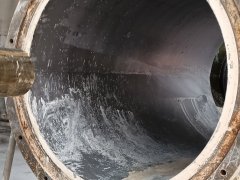
The feeding device introduces materials evenly into the mill chamber through the hollow shaft spiral. The chamber is lined with ceramic liners and contains alumina balls of various specifications. As the cylinder rotates, centrifugal force lifts the grinding media to a certain height before they fall, impacting and grinding the materials. The powdered material that meets the required fineness is discharged through the discharge grate, completing the grinding process.
The entire system is equipped with a dust collector, which employs an advanced electromagnetic pulse automatic cleaning mechanism. After the dust-laden gas enters the dust collector, the dust is filtered by the filter bags. The dust adhering to the outer surface of the filter bags is scattered and collected at the bottom under the action of pulse back-blowing gas. The filtered clean gas is then discharged into the atmosphere through a fan.
Technical Parameters
Model/Model number | Ball mill model | Grading Machine Model | Total power of the production line(kw) | Output(kg/h) | Product Granularity(um) | Grading accuracy | Dust removal area(m2) | Dust concentration(mg/m3) |
GMF-50 | 1245 | GF50 | <75 | 480-600 | 5-50 | D97 | >50 | <40 |
GMF-100 | 1557 | GF100 | <145 | 720-1080 | 5-50 | D97 | >70 | <40 |
GMF-200 | 1870 | GF200 | <225 | 2100-2400 | 5-50 | D97 | >100 | <40 |
GMF-400 | 2270 | GF400 | <345 | 3000-3600 | 5-50 | D97 | >120 | <40 |
GMF-600 | 2470 | GF600 | <550 | 4200-4800 | 5-50 | D97 | >200 | <40 |
GMF-800 | 2680 | GF800 | <665 | 5000-6600 | 5-50 | D97 | >200 | <40 |