- Products
-
Shops
AI Search

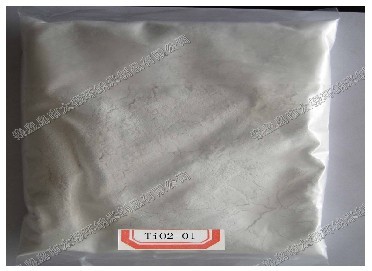
Commonly known as titanium dioxide, it exists in three crystal forms: brookite, anatase, and rutile. All appear as white powders with an average particle size of less than 100 nm. In addition to the physicochemical properties of conventional titanium dioxide, our company's nano-titanium dioxide (anatase and rutile) also exhibits excellent transparency and a high capacity for absorbing and blocking ultraviolet rays. Nano-titanium dioxide possesses strong chemical and thermal stability, is safe and non-toxic, insoluble in water, organic acids, and weak inorganic acids, but soluble in sulfuric acid, alkalis, and hydrofluoric acid.
Application Scope:
1. UV-resistant materials, chemical fibers, plastics, inks, coatings, food packaging,
2. Photocatalytic catalyst:
A. Self-cleaning glass and self-cleaning ceramics: Utilizing the photocatalytic reaction of titanium oxide, organic substances adsorbed on the titanium oxide surface can be decomposed into carbon dioxide and water, which are then washed away along with the remaining inorganic substances.
B. Antibacterial material: When light shines on the surface of TiO2 crystal grains, it absorbs near-ultraviolet light with a wavelength ≤387.5 nm, disrupts the cell membrane, enters the bacterial body to prevent the transport of membrane-forming substances, and blocks its respiratory system and electron transport system, thereby effectively killing bacteria.
C. Air Purification: Utilizing photocatalytic oxidation technology, it can remove pollutants from the air at room temperature using water vapor and oxygen in the air, such as harmful gases like nitrogen oxides, sulfides, and formaldehyde. The use of nano-TiO2 photocatalysts significantly enhances the efficiency of air purification. Compared to other heterogeneous catalytic oxidation methods that operate at higher temperatures, it offers notable advantages.
D. Wastewater treatment, chemical industry: TiO2 photocatalytic oxidation can rapidly and completely oxidize hydrocarbons, halogenated compounds, hydroxy acids, surfactants, nitrogen-containing organic compounds, and organophosphorus pesticides in water into harmless substances such as CO2 and H2O. Nano-TiO2 photocatalytic degradation technology has the advantages of being operable at room temperature, completely breaking down organic matter, producing no secondary pollution, and having low costs.
3. Cosmetics, sunscreen, whitening moisturizer, toner, foundation cream, facial cleanser, pressed powder,
4. Coatings for the paper industry, used to improve printability and opacity of paper.
5. Used in the smelting industry for manufacturing titanium, titanium-iron alloys, cemented carbides, etc.
6. Aerospace Industry and Stealth Materials: Nano-TiO2 has the ability to absorb radar waves and infrared radiation, making it a suitable choice for stealth materials used in the outer coatings of aircraft, spacecraft, tanks, armored vehicles, missiles, warships, and military equipment.
Recommended dosage: 1~3% for sunscreen, 3~5% for whitening and moisturizing, 3~8% for anti-ultraviolet, and 2.5% for ink and coatings.